The Sunderland National Glass Centre was established in 1998 to celebrate and preserve Sunderland’s centuries-old glassmaking heritage, rooted in the arrival of stained glass at Monkwearmouth in 674 AD. Built on the former J.L. Thompson shipyard site, it now serves as a cultural hub, museum, and working studio under the University of Sunderland.
🌟 Origins of Glassmaking in Sunderland
• 674 AD: Saint Benedict Biscop, founder of the Monkwearmouth-Jarrow Priory, brought French glaziers to Sunderland to craft stained glass windows—the first recorded use of stained glass in Britain.
• This innovation marked Sunderland as the birthplace of English glassmaking, linking the city’s identity to craftsmanship and artistry.
⚒️ Industrial Growth
• By the 18th century, Sunderland’s glass industry flourished thanks to abundant cheap coal and imported high-quality sand.
• The city became a powerhouse for glass production, supplying bottles, windows, and decorative glass across Britain and beyond.
• Glassmaking became a defining feature of Sunderland’s industrial landscape, alongside shipbuilding and coal mining.🏗️ Creation of the National Glass Centre
• The Centre was built on the north bank of the River Wear, on the site of the former J.L. Thompson and Sons shipyard.
• Its location near St Peter’s Church, Monkwearmouth, symbolically connects modern glass innovation with its ancient roots.
• October 23, 1998: Officially opened by Prince Charles, the Centre was envisioned as both a museum and a working studio, showcasing Sunderland’s legacy while promoting contemporary glass art.
🎓 University of Sunderland Partnership
• In 2010, the University of Sunderland took over management of the Centre.
• It became a hub for education, research, and artistic practice, integrating glass studies into academic programs and supporting emerging artists.
🎨 Cultural Role Today
• Visitors can watch live glassblowing demonstrations, explore exhibitions from international and local artists, and even participate in hands-on workshops.
• The Centre also houses The Glass Yard café and a gift shop, making it a vibrant cultural attraction on the River Wear.
• It remains a symbol of Sunderland’s resilience, creativity, and pride in its heritage.
🕰️ Recent Developments
• The Centre has faced debates about its future, with campaigns to preserve it as a landmark of Sunderland’s identity.
• Despite challenges, it continues to stand as a bridge between Sunderland’s industrial past and its cultural present.
In short: The National Glass Centre embodies Sunderland’s journey from Benedict Biscop’s pioneering stained glass in the 7th century, through industrial expansion in the 18th century, to its modern role as a centre for art, education, and heritage. It is both a living museum and a creative workshop, keeping Sunderland’s glassmaking spirit alive.
✨ A Heritage Narrative of the National Glass Centre
Step onto the north bank of the River Wear, where the wind carries echoes of shipyard hammers and the shimmer of ancient stained glass. Here, at the National Glass Centre, Sunderland’s story unfolds in light and fire.
🌿 The First Sparks of Glass
In the year 674, Saint Benedict Biscop returned from Gaul with master glaziers, their craft unknown in England. At St Peter’s Church, Monkwearmouth, they set coloured panes into stone arches—the first stained glass windows in Britain. Imagine the awe of monks seeing sunlight transformed into jewel-like radiance. From that moment, Sunderland became the birthplace of English glassmaking.
⚒️ Coal, Sand, and Industry
Centuries passed, and Sunderland’s fortunes grew with its natural gifts: coal from the Wear Valley and fine sand shipped from abroad. By the 18th century, furnaces roared along the riverside, producing bottles, windows, and tableware. Glass was no longer just sacred—it was everyday life, carried from Sunderland to the world. The city’s identity fused with industry, its people proud craftsmen of fire and sand.
🚢 From Shipyard to Glass Centre
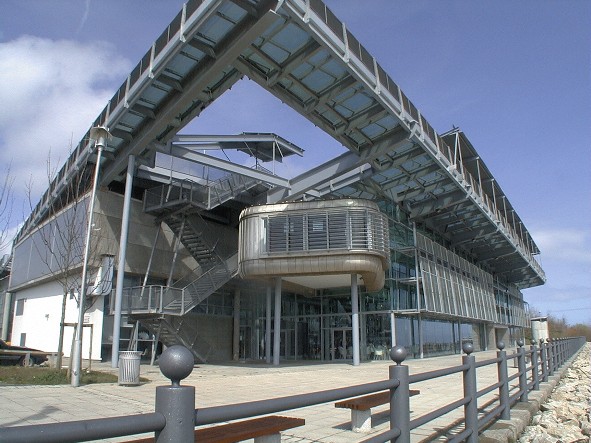
The very ground beneath your feet once rang with the labour of J.L. Thompson & Sons shipbuilders, whose vessels carried Sunderland’s name across oceans. When the shipyard fell silent, a new vision rose: to honour the city’s glassmaking heritage. In 1998, the National Glass Centre opened, its steel and glass architecture reflecting both Sunderland’s industrial past and its creative future. Prince Charles himself cut the ribbon, declaring it a beacon of culture.
🎓 A Living Workshop
Today, the Centre is more than a museum—it is alive with craft. Step inside and you’ll hear the hiss of molten glass, see artisans shaping glowing forms, and watch students of the University of Sunderland carry forward traditions with modern artistry. Exhibitions showcase both local talent and international masters, while workshops invite visitors to try their hand at this ancient skill.
🌊 Light on the Wear
The Centre’s riverside setting is no accident. It stands beside St Peter’s Church, linking the birthplace of English stained glass with the future of contemporary design. Its glass roof invites sunlight to dance across the atrium, reminding all who enter that Sunderland’s story is written in light.
🕯️ A Closing Reflection
The National Glass Centre is not just a building—it is Sunderland’s memory made visible. From Benedict Biscop’s monks to modern-day artists, the city has always looked to glass as a symbol of transformation.